

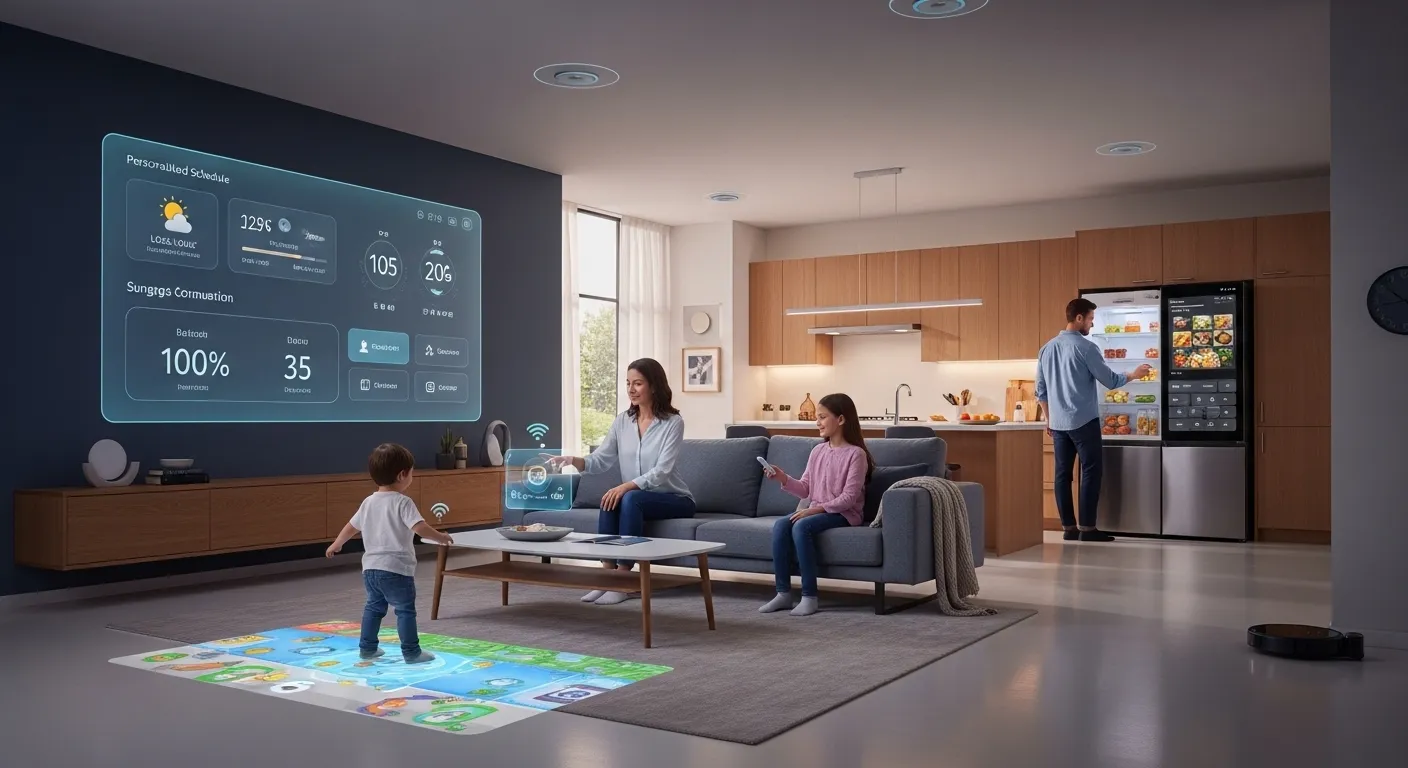
You’ve probably heard the phrase “smart home” thrown around a lot lately, but you’re still not entirely sure what it means for your actual life. That’s fair. How smart home technology will change lives isn’t about buying expensive gadgets or rewiring your whole house. It’s about something far more meaningful: getting time back, feeling safer, and carrying less mental weight every day. Whether you’re a busy parent, a caregiver for an aging relative, or just someone tired of wondering if you locked the front door, the answers you need are here.
What It Actually Means to Have a Smart Home in 2026
A smart home is a living space where devices connect to a central system you control through your phone, your voice, or a pre-set schedule. Lights, locks, thermostats, cameras, and appliances all become part of one coordinated network. But here’s what most guides completely skip over: a smart home isn’t a single product you buy. It’s an ecosystem you build gradually, starting with one or two devices that make your daily life noticeably easier, then expanding from there.
The change that matters most in 2026 is something called the Matter protocol. Matter is a universal connectivity standard that allows devices from competing ecosystems to work together without friction. That means your smart speakers, your connected hubs, and your automation devices can all operate in the same home network without fighting each other for control. For years, brand incompatibility was one of the biggest complaints from smart home users. Matter is the standard that finally solved it.
The AI powering modern smart home systems has also changed dramatically. A few years ago, smart home AI was essentially rule-based automation: if this happens, do that. In 2026, the AI in your smart home actually learns. It tracks your patterns over days and weeks and starts anticipating what you need before you ask. Your thermostat warms the house before you typically arrive home. Your lights shift without you setting a schedule. The home starts learning you.
How Your Daily Routine Gets Completely Transformed
Picture waking up to lights that rise gradually instead of jarring you with noise. Your coffee maker already started. Your thermostat adjusted to your preferred morning temperature while you were still asleep. You haven’t touched a single switch. By the time you walk out the front door, it locks itself and sends a confirmation to your phone. That isn’t a scene from a technology concept video. That’s an ordinary Tuesday morning for millions of connected home users right now.
Morning Automation and the Time You Get Back
What most people don’t realize is how much time routine tasks consume across a full week. Adjusting the thermostat. Checking if the stove is off. Turning lights off in rooms you’ve already left. Each takes seconds, but added up across seven days they drain real time and mental energy. Smart home automation handles all of it silently. You set up the rules once, and your home executes them every day without you having to think again.
Evening Wind-Down and Smarter Sleep
Smart lighting does more than save electricity. Tunable bulbs shift from bright white light during the day to warm amber in the evening, supporting your natural circadian rhythm and helping your body prepare for sleep without you doing anything at all. Pair that with a thermostat that automatically drops the bedroom temperature to your optimal sleep setting, and smart home technology starts feeling less like a feature list and more like something designed around how human beings actually function.
If you’re managing a household with children, smart home automation adds a layer of coordination that would be difficult to replicate manually. Bedtime routines become automatic: lights dim at eight, the TV shuts off, and the thermostat adjusts. Locks notify you when kids arrive home from school. Cameras let you check in without making a call. The cognitive load of managing a busy household is significant, and a smart home takes a meaningful portion of it off your plate.
Smart Home Security and What It Gives You Back
Home security changes completely when your home is connected. You can pull up a live camera feed from anywhere in the world in seconds. Your smart lock can grant access to a delivery person while you’re at work and revoke it the moment they leave. Motion-triggered lights activate the instant someone approaches. And if anything trips an alert, you know immediately rather than finding out hours later. That shift from reactive to real-time protection matters more than most people expect.
A question that comes up constantly is what happens to your smart home security when the internet goes down. This might surprise you: most modern smart home devices store footage locally and maintain basic functions without a connection. Your smart lock still unlocks with a code. Your alarm still triggers. The local automation keeps running. Connectivity restores everything else the moment your internet comes back. A loss of connection is an inconvenience, not a security collapse.
Smart home upgrades also affect property value in ways that are now well-documented. Homes with smart security systems, smart thermostats, and connected energy management attract higher buyer interest and sell faster than equivalent properties without them. As connected living becomes expected rather than exceptional, buyers are starting to see the absence of smart features as a drawback. Installing smart home technology now is an investment that works for your daily life and builds long-term value at the same time.
The Real Energy Savings and How They Add Up
Research confirms that smart home energy management can reduce household energy consumption by 10 to 30 percent annually. That’s not a marketing estimate. Studies have tracked real households over real time periods, and the savings hold up. A smart thermostat learns your daily schedule within the first few weeks and stops heating or cooling an empty house. That single change alone accounts for a significant portion of the savings most smart home owners report in their first year.
Real-time energy monitors show you exactly which appliances consume the most power. The result is often surprising. An older refrigerator drawing power inefficiently. A phone charger left plugged in for hours with nothing attached. A second freezer you almost forgot about in the garage. Seeing your energy consumption in real time changes the decisions you make, and that behavioral shift is what compounds the savings well beyond what any single smart device could deliver alone.
For homeowners thinking about energy resilience, a smart home becomes more powerful when paired with solar panels and a battery backup system. The battery stores solar energy during the day, and your home’s management system automatically decides when to draw from the grid versus stored power, always choosing the most cost-effective option. During outages, your battery keeps essential smart systems running. Energy independence stops being a concept and starts being your actual daily experience.
How Smart Homes Are Changing Lives for Elderly People
I’ve spoken with caregivers who set up smart home systems for elderly parents, and one theme came up every single time. It wasn’t the technology itself that changed things. It was being able to sleep through the night without wondering if their parent was safe. According to recent research, 75 percent of adults over 50 would use smart home monitoring specifically to live independently for longer. This isn’t a luxury for most families. It’s truly a lifeline.
For an elderly person living alone, voice-controlled devices remove friction from daily tasks most of us take for granted. Turning on a light when your hands are full. Getting a medication reminder that speaks out loud. Having a fall sensor that automatically calls for help. If any of this sounds like your family’s situation, you’re in exactly the right place. The dignity of independent living is something technology can protect, and in 2026, it does.
Smart home monitoring goes further than most people imagine. Occupancy sensors detect movement patterns and can alert family members if an elderly person hasn’t moved through key areas of the home by a certain time in the morning. Door sensors notify caregivers if someone exits at an unusual hour. These systems don’t require the elderly person to do anything actively. They work quietly in the background, providing safety without removing the sense of privacy and autonomy everyone deserves.
Smart Home Health Benefits Go Further Than Comfort
Your home has a bigger effect on your health than most people realize. Smart air quality monitors detect pollutants, carbon dioxide buildup, and allergens, then trigger ventilation before you notice a problem. Poor indoor air quality is linked to fatigue, headaches, and worsened respiratory conditions, and most households have no idea what their indoor air actually measures. A connected home changes that. It monitors the environment you live in constantly and responds without requiring any action from you.
Smart home automation also reduces anxiety in ways people tend to underestimate. The quiet persistent worry about whether you left the stove on or locked the front door is a form of low-level stress that follows people throughout their day. Smart homes eliminate that loop. You check the app, see everything is fine, and your brain stops asking the question. That kind of mental relief is a health benefit even if it never appears on a product spec sheet.
For people living with physical disabilities, voice control and home automation can be life-altering in the most direct possible sense. Controlling lights, locks, blinds, and temperature with a voice command removes the physical friction that makes independent living difficult or impossible for many. This is where smart home technology quietly does something remarkable: it levels the playing field. A person with limited mobility can manage their entire home environment with the same ease as someone with full physical capability.
The Honest Truth About Challenges You Will Face
Smart home technology is truly life-changing, but only when it works. And sometimes it doesn’t. Devices fall off Wi-Fi at three in the morning. Smart bulbs reset to full brightness without warning. Subscription fees appear months after you’ve already bought the hardware. These are real frustrations, and if you visit any smart home community online you’ll find thousands of users who share them. The point isn’t to scare you away. It’s to help you go in with clear expectations.
The most common mistake new smart home users make is buying devices from multiple brands without thinking about how they’ll communicate with each other. The result is a home where some things work together and others don’t, requiring multiple apps to manage a single room. The fix is straightforward. Choose one ecosystem to anchor your setup, build outward from there, and look for devices with Matter certification to ensure maximum compatibility across brands from the beginning.
Privacy is a legitimate concern and you deserve a straight answer rather than corporate reassurance. Smart home devices collect data about your habits, your schedule, and your behavior patterns. Most of that data stays encrypted in transit and is processed under privacy policies that have improved considerably under consumer pressure in recent years. That said, it’s worth reading those policies before you buy and choosing devices from manufacturers with transparent data practices. Informed is always better than surprised.
Can Renters Use Smart Home Technology?
Yes, and this is a point most smart home content completely ignores. If you’re renting, you still have access to a meaningful range of smart home features. Smart plugs, voice assistants, portable security cameras, and smart bulbs require no drilling, no wiring, and no landlord permission. They pack up when you move. You won’t get the full ecosystem a homeowner can build, but you can automate lighting, manage energy use, and improve your security starting today.
How to Start Your Smart Home Journey Right Now
Starting a smart home doesn’t require spending thousands of dollars or understanding complicated technology. For around $100, a smart speaker and a couple of smart bulbs give you a real taste of connected living. For $500, you can add a smart thermostat, a video doorbell, and a smart lock. For $2,000 and up, you’re looking at a whole-home setup covering every major system. The most important rule: pick one ecosystem first and build everything around it.
The biggest mistake people make when setting up a smart home is underinvesting in their network. Smart home devices rely on Wi-Fi to function reliably, and a weak or overcrowded network is the root cause of most of the frustrations you’ll read about in smart home communities. Before buying a single device, make sure your router can handle the number of connected devices you’re planning for. A strong network foundation prevents most of the reliability problems new users experience.
A practical way to approach your smart home is one room at a time rather than trying to do everything at once. Start where you spend the most time. For many people that’s the living room or bedroom. Get comfortable controlling your lighting and temperature in that space, learn how your chosen ecosystem works, and expand only when you feel ready. Smart home building works best as a slow, intentional process rather than a single expensive weekend of impulse purchases.
What Smart Home Technology Looks Like in the Future
The smart home of tomorrow won’t just respond to your commands. It will predict your needs before you voice them. AI systems already learn home occupancy patterns, adjust energy use without input, and detect unusual activity automatically. The next phase involves emotional AI, where your home adjusts lighting and temperature based on detected stress levels. According to recent market data, the global smart home industry is projected to reach $1.4 trillion by 2034. That number tells its own story.
A trend called AgeTech is accelerating all of this. AgeTech covers the intersection of smart home technology and elder care, and in 2026 it’s one of the fastest-growing areas in healthcare innovation. Technology companies and healthcare providers are building integrated systems that connect fall detection, medication tracking, and emergency response into a single home environment. What once required a dedicated care facility is beginning to happen at home, quietly and automatically, without the elderly person needing to do anything.
The homes being built today are designed with smart infrastructure as a standard feature rather than an expensive upgrade. New construction increasingly includes embedded sensors, pre-wired network access in every room, and systems capable of integrating with future technology that doesn’t exist yet. For existing homeowners, retrofitting with smart technology has never been more accessible or affordable. The gap between a traditional home and a connected home is narrowing faster than most people expect.
How Smart Home Technology Will Change Lives Starting Today
Smart home technology isn’t something you need to fully understand before you begin. You just need one small step. Buy a smart speaker. Install one bulb. See how it feels to ask your home for something and have it listen. Every person who has taken that first step says the same thing: they wish they’d started sooner. Your home has the potential to protect you, support you, and give you back time every single week. Take that step.
If you want to learn how future healthcare technology is elevating at home care in 2026, I have written a comprehensive guide covering every major development shaping this space in 2026. From remote patient monitoring and AI-powered diagnostics to hospital at home programs and wearable devices, the guide explains how each technology works, who benefits most, and what families should ask before getting started.
Frequently Asked Questions
What is smart home technology?
Smart home technology connects your devices to a system controlled by voice, app, or automation.
How much does a starter smart home cost?
A basic setup starts around $100. A full whole-home system typically costs $2,000 or more.
Can renters benefit from smart home technology?
Absolutely. Smart plugs, bulbs, and portable cameras require no installation and move with you when you leave.
Is smart home technology safe from hackers?
No system is fully secure. Use reputable brands and strong unique passwords for all connected devices.
What happens when the internet goes down?
Most devices maintain basic local functions. Your schedules, automations, and security alarms keep working without internet access.
How do smart homes help elderly people live safely?
Voice commands, fall detection sensors, and occupancy monitoring let elderly people live independently with family peace of mind.
What is the Matter protocol in smart homes?
Matter is a universal standard letting devices from different brands work together in the same smart home.