

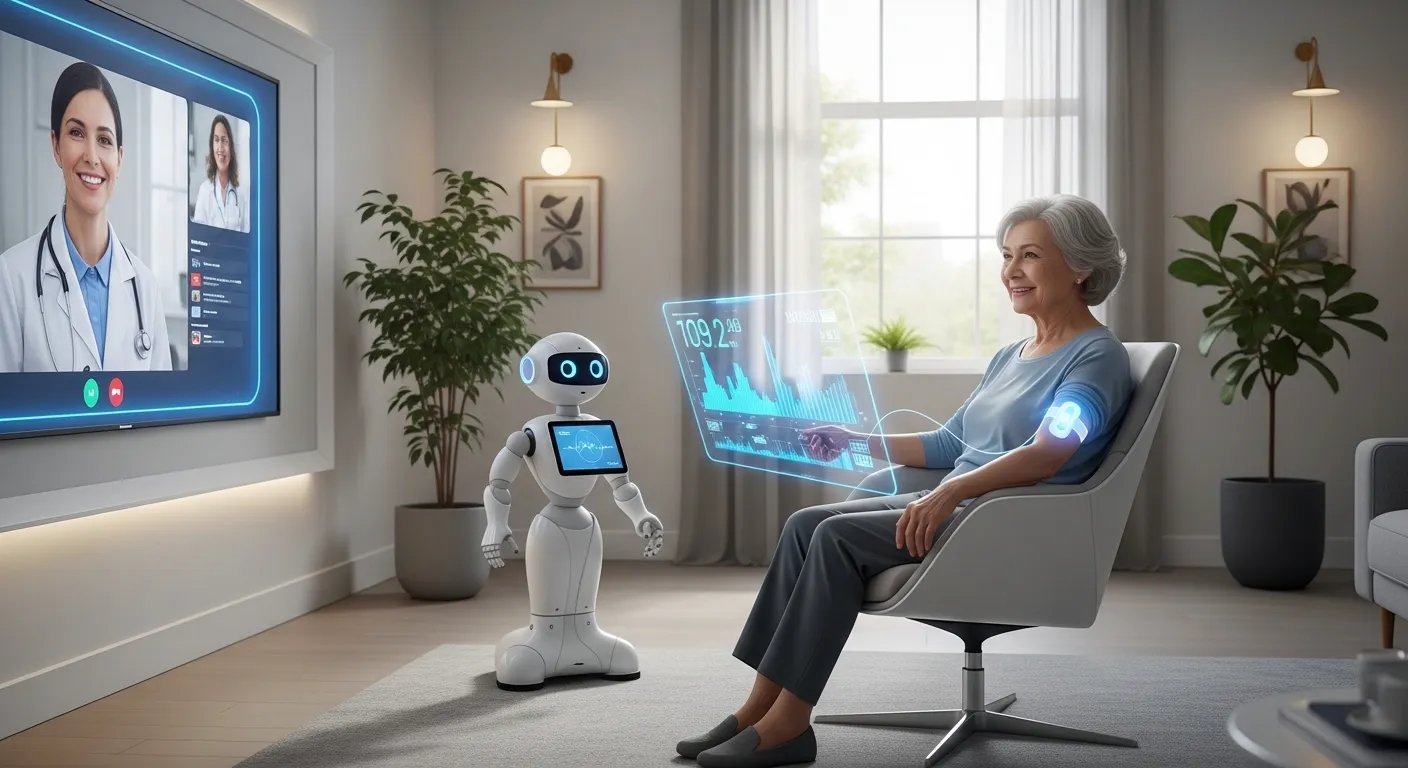
If you’re watching a parent age at home, or managing your own chronic condition between hospital visits, you already know how fragile that situation can feel. One missed medication. One undetected warning sign. One fall nobody saw coming. That fear is real, and it’s exactly what how future healthcare technology is elevating at home care is beginning to solve. Today, patients are receiving clinical-quality monitoring, AI-powered health alerts, and virtual specialist access without leaving their homes. This article explains every major technology driving that change and what it means for you and your family.
Why Home Care Technology Is Gaining Ground Right Now
Here’s the thing most people miss: the hospital was never the ideal place to heal. Studies show patients recovering at home report better outcomes and fewer complications than those in clinical facilities. Technology finally caught up with that preference. Recent data confirms healthcare profit margins dropped sharply between 2019 and 2024, pushing providers toward home-based solutions. That financial pressure is one key reason technology investment in at-home care is accelerating faster in 2026 than any previous year.
The aging population is accelerating this shift too. By 2026, the number of adults over 65 in the United States alone has crossed 60 million. Most of them want to stay at home. Most of them have conditions that require ongoing monitoring. And most of them live in areas where specialist access is limited. That combination created a problem technology was built to solve: how do you deliver high-quality clinical care to people without bringing them into a hospital?
Policy changes are driving this too, and most articles won’t explain this clearly. Government health programs in several countries now reimburse care delivered at home at rates comparable to inpatient services. In the United States, federal programs expanded coverage for home-based acute care in recent years. When reimbursement follows patients home, healthcare organizations follow the money. That policy shift opened the door for massive technology investment in the at-home care space.
Patient preference is also a major factor. Research consistently shows that when given a genuine choice, most people prefer to receive care at home over a hospital or care facility. That preference is stronger among older adults, people with disabilities, and patients managing long-term conditions. When the healthcare system designs around what patients actually want, technology becomes the bridge. It makes the preference possible without sacrificing the clinical quality that patients and their families need to feel safe.
The Key Technologies Making At Home Healthcare Possible
Before you dive into any one device or platform, it helps to understand the technology ecosystem as a whole. At-home care today relies on several interconnected systems: remote monitoring hardware, AI-powered analysis software, digital communication tools, and smart devices that automate daily health routines. None of these technologies work in isolation. What makes 2026 different from five years ago is that these systems now talk to each other, and clinical teams can respond in real time.
Remote Patient Monitoring
Remote patient monitoring uses connected devices to track your vital signs continuously and send that data to a clinical team. Think blood pressure cuffs that transmit readings automatically, pulse oximeters that flag oxygen drops before you feel them, and glucose monitors that alert a nurse if your levels go out of range. What makes this different from older home health is speed. Your care team sees problems developing in real time, not at your next scheduled visit.
Telehealth and Virtual Care
Telehealth started as a convenience during the pandemic, but it’s evolved into something far more sophisticated. You can now have a specialist in cardiology, neurology, or oncology join your care team virtually, regardless of where you live. Modern telehealth platforms integrate with your monitoring devices, so your doctor reviews your real data before the appointment even begins. That shift cuts consultation time, improves accuracy, and lets your care team catch trends across weeks of data, not just a snapshot.
Wearable Health Devices
Wearable health technology has moved well beyond step counters. Medical-grade wearables now track atrial fibrillation, detect blood oxygen irregularities, monitor respiratory rates, and even flag early signs of infection through skin temperature changes. The difference between a consumer fitness tracker and a medical-grade device matters. If your parent or you are relying on wearable data for actual healthcare decisions, the device needs clinical validation. Ask your care provider specifically whether the device you’re using meets that standard.
The Internet of Medical Things
The Internet of Medical Things describes what happens when all your health devices connect and share data. Your blood pressure monitor, wearable tracker, glucose sensor, and medication dispenser don’t operate in silos anymore. They build a composite picture of your health and alert your care team when patterns across multiple metrics suggest a developing problem. Think of it as a clinical oversight dashboard running 24 hours a day, built entirely around your care.
AI-Powered Diagnostics and Ambient Technology
This might surprise you: AI in home care isn’t primarily about diagnosing diseases. It’s about pattern recognition at a scale no human clinician can match. AI tools analyze your continuous health data, flag deviations from your personal baseline, and alert care teams before symptoms become emergencies. According to recent research, AI investment now represents the majority of total healthcare technology spending, and providers using ambient AI documentation tools report significant improvements in clinical efficiency and time spent with patients.
Ambient AI is also changing the caregiver experience in home settings. Clinicians who visit patients at home have historically spent a significant portion of their time on documentation. Ambient AI tools listen to care visits with patient consent and generate clinical notes automatically. Studies show providers using these tools report meaningfully more time focused on the patient in front of them rather than on administrative tasks. That’s a direct patient benefit disguised as a workflow improvement.
Hospital at Home Programs
Hospital at home is exactly what it sounds like: acute-level care delivered in your home rather than a facility. Patients in these programs receive daily nurse visits, physician oversight, intravenous medications, and continuous remote monitoring, all coordinated as one clinical episode. Data confirms these programs reduce costs significantly while achieving outcomes comparable to traditional inpatient stays. Whether your insurance covers this depends on your specific plan and location, so check directly with your provider.
Smart Home Devices and Medication Management
Smart home technology might be the most underrated part of the at-home care conversation. Automated pill dispensers ensure your medications are taken on time and alert a family member or clinician if a dose is missed. Fall detection systems use motion sensors and AI to recognize a fall and notify emergency contacts within seconds. Voice-activated devices let patients contact care teams without picking up a phone. Together these tools reduce the daily risk of living alone with a health condition.
Virtual Reality in Home Rehabilitation
Virtual reality might sound like entertainment technology, but its clinical application in home-based physical therapy is real and growing. Patients recovering from strokes, joint replacements, and neurological conditions can complete guided rehabilitation exercises through VR headsets at home, with their sessions tracked and adjusted remotely by a physical therapist. Early data shows comparable engagement and outcome rates to in-person therapy. It’s not available to everyone yet, but it’s moving quickly from research to standard home care practice.
Who Benefits Most From Home Healthcare Technology
The truth is, home care technology doesn’t serve one type of patient. The 72-year-old living alone with hypertension, the 45-year-old managing type 2 diabetes around a work schedule, and the post-surgery patient trying to recover without a nursing home stay all benefit differently. Understanding which profile matches your situation helps you focus on the specific technologies that will actually change your daily health experience rather than feeling overwhelmed by the full landscape of options.
Elderly Adults Aging in Place
For older adults, the goal isn’t just medical management. It’s independence, dignity, and staying connected to the life they’ve built. Technology makes that possible longer. Remote monitoring catches health deterioration early. Fall detection prevents a common catastrophe. Telehealth replaces the exhausting trip to a specialist’s office. And for family members watching from a distance, monitoring dashboards provide something that matters just as much as clinical data: peace of mind. If you’re in this situation, you know exactly what I mean.
Patients Managing Chronic Conditions
Chronic disease management is where home care technology delivers its clearest return. If you’re living with heart failure, COPD, diabetes, or hypertension, the gap between your scheduled appointments is where risk lives. Remote monitoring fills that gap. Continuous glucose monitors send your readings to a clinical dashboard. Wearables flag irregular heart rhythms before you experience symptoms. Telehealth lets your care team adjust your treatment plan without waiting weeks for an in-person slot. Your condition gets managed daily, not quarterly.
Post-Surgery Recovery at Home
Think about it this way: every night a recovering patient spends in a hospital is a night surrounded by infectious pathogens, disrupted sleep, and institutional routines that have nothing to do with recovery. Home is where healing happens most naturally. Post-operative patients discharged into technology-enabled home care receive wound monitoring through digital imaging, vital sign tracking via wearables, and physical therapy delivered through virtual sessions. The hospital gets your procedure. Home gets your recovery.
Rural and Mobility-Limited Patients
If you live more than an hour from a specialist, or if mobility limitations make travel genuinely dangerous, this technology isn’t just convenient. It’s transformative. A patient in a rural county can now access the same cardiologist or endocrinologist as someone living in a city, through a telehealth platform on a tablet. The geographic lottery of healthcare access is starting to break down, and home care technology is one of the primary forces doing the breaking.
What Is New in 2026 That Changes Everything
Most guides on this topic stop at the familiar technologies. What they don’t cover is how dramatically the landscape shifted in 2025 and 2026. Agentic AI systems are now running administrative functions in home care organizations, scheduling visits, flagging care gaps, and coordinating between clinical teams without human input at each step. Patient-side AI tools are emerging that help you understand your own health records, flag billing inconsistencies, and prepare better questions before each telehealth appointment.
Global healthcare systems are also demonstrating models the United States is watching closely. Countries with nationalized health programs have launched hospital-equivalent care programs that extend acute clinical services into patients’ homes at scale. In Australia, a major national care reform launched in mid-2025 created over 100,000 home care packages using structured technology support as a foundation. These international programs are proving that home-based care with technology support isn’t experimental. It’s a viable system for the long term.
There’s also a regulatory development most people haven’t heard about: electronic visit verification mandates. In 2026, most states now require home health agencies to use GPS-verified digital check-in systems when caregivers visit patients. That sounds bureaucratic, but the patient benefit is real. It creates an automatic record of every care visit, helps identify gaps in care delivery, and reduces fraud in home health billing, which ultimately protects program funding that millions of patients rely on.
The Challenges That Still Need Solving
Here’s what most optimistic guides on home care technology won’t tell you: a significant portion of the population that needs these tools most isn’t comfortable using them. Older adults, patients with limited education, and people in lower-income households face real barriers to technology adoption. A device that sits unused in a box provides no health benefit. The responsibility for bridging this gap falls on care agencies, families, and technology designers, not on patients.
Data privacy in connected home care is a genuine concern, not just a talking point. Your health monitoring devices generate continuous streams of sensitive information. Who stores that data, how long they keep it, and who can access it are questions you have every right to ask before agreeing to use any home monitoring system. Look for care programs that use encrypted data transmission, clear data retention policies, and patient-controlled access permissions. It’s your health data. Treat it that way.
Technology should serve every patient, not just the most digitally confident ones. Right now, home care technology works best for patients who have reliable broadband internet, a modern smartphone or tablet, and the literacy to navigate digital interfaces. Rural broadband gaps, device cost barriers, and language access limitations mean the patients who could benefit most from remote care sometimes access it least. Closing this gap requires deliberate policy and investment. It’s the most important unsolved problem in this space.
Coverage for home care technology is expanding but it isn’t universal. Medicare covers certain remote patient monitoring services and telehealth consultations, but the specific devices, conditions, and provider relationships that qualify vary. Medicaid coverage differs by state. Private insurance plans each have their own rules. Before your family invests in any monitoring device or enrolls in a hospital at home program, verify directly with your insurer what is covered and under what conditions. Don’t assume. Ask first.
There’s another challenge the industry rarely discusses openly: the caregiver shortage. Home health agencies across the country face severe staffing shortages, with turnover rates that make consistent care delivery difficult. Technology can partially compensate by extending the reach of each available clinician. One nurse monitoring a remote patient dashboard can track dozens of patients’ trends simultaneously. That doesn’t replace the human relationship at the heart of good care, but it does make the existing workforce more effective.
A Practical Guide for Families Considering Home Care Technology
When you’re trying to set up technology-enabled care for a parent or yourself, the number of options can feel paralyzing. Start with the clinical need, not the device. What is the health condition that requires monitoring? What vital signs or behaviors are most important to track? Once you know the clinical answer, you can work backward to the technology that fits. Your doctor or home health agency should be your first resource, not an online retailer.
In my experience helping families understand this landscape, the most important questions are these: Is this device clinically validated for my specific condition? Who reviews the data it collects, and how quickly do they respond to alerts? Is the data encrypted and stored under compliant protocols? Is there a real human on the other end of this system during an emergency? If you can’t get clear answers to those four questions, that’s your answer.
The most common frustration families describe is a parent who refuses to use the device. I’ve found the most effective approach is to start with the least intrusive technology and frame it around the thing they care most about: staying home. A wearable fall detector is far easier to accept than a full monitoring kit. Start there. Once someone sees it working and understands it keeps them out of a facility, resistance tends to soften.
The Future of At Home Care
Where does all of this lead? The clearest trajectory points toward a fundamental rethinking of what a hospital is. Not a building. A network. Acute care delivered where patients are, coordinated through connected devices, AI monitoring, and specialist telehealth access, and supported by visiting nurses and care technicians. The physical hospital becomes a facility for procedures, surgeries, and critical stabilization. Everything else, the monitoring, the ongoing management, the recovery, happens at home. That isn’t speculation. It’s the direction already underway.
What most people miss is that technology isn’t replacing care. It’s returning care to where patients want it most. The goal was never to turn homes into hospitals. It was to make hospitals unnecessary for the vast majority of what people need. If you’re considering home care technology for yourself or someone you love, the moment to start learning about your options is now. The tools exist. The systems are ready. The only step left is yours.
If you want to learn how smart home technology will change lives in 2026, I have written a comprehensive guide covering everything from daily routine automation and real energy savings to elderly independence and home security. You will discover how the Matter protocol is changing device compatibility, what smart homes actually cost to set up, and how to start even as a renter.
Frequently Asked Questions
What technology is used in home health care today?
Remote patient monitoring, wearable devices, telehealth platforms, AI diagnostics, and smart home tools are the core technologies used today.
How does remote patient monitoring work at home?
Connected devices track your vital signs and send data continuously to a clinical team who monitors for changes.
Is home healthcare technology covered by Medicare?
Medicare covers certain telehealth and remote monitoring services, but specific coverage varies by condition, provider, and plan.
What is a hospital at home program?
A hospital at home program delivers acute-level clinical care in your own home instead of a facility.
Can at-home monitoring replace regular doctor visits?
No. At-home monitoring supplements clinical care. It identifies changes faster but doesn’t replace professional diagnosis or treatment decisions.
How do I know if a wearable is medically accurate?
Ask whether the device has received regulatory clearance and clinical validation for the specific health metrics it tracks.
What is the Internet of Medical Things?
It refers to connected medical devices that share health data with each other and with clinical care teams automatically.
How does telehealth help elderly patients at home?
Telehealth gives older adults access to specialist care without travel, reducing the physical and logistical burden of appointments.
What is agentic AI in home healthcare?
Agentic AI handles administrative tasks like scheduling visits, flagging care gaps, and coordinating teams without needing step-by-step human instructions.
Is my health data private with home monitoring devices?
It should be. Always confirm your device uses encrypted transmission and that the provider follows data protection regulations.