

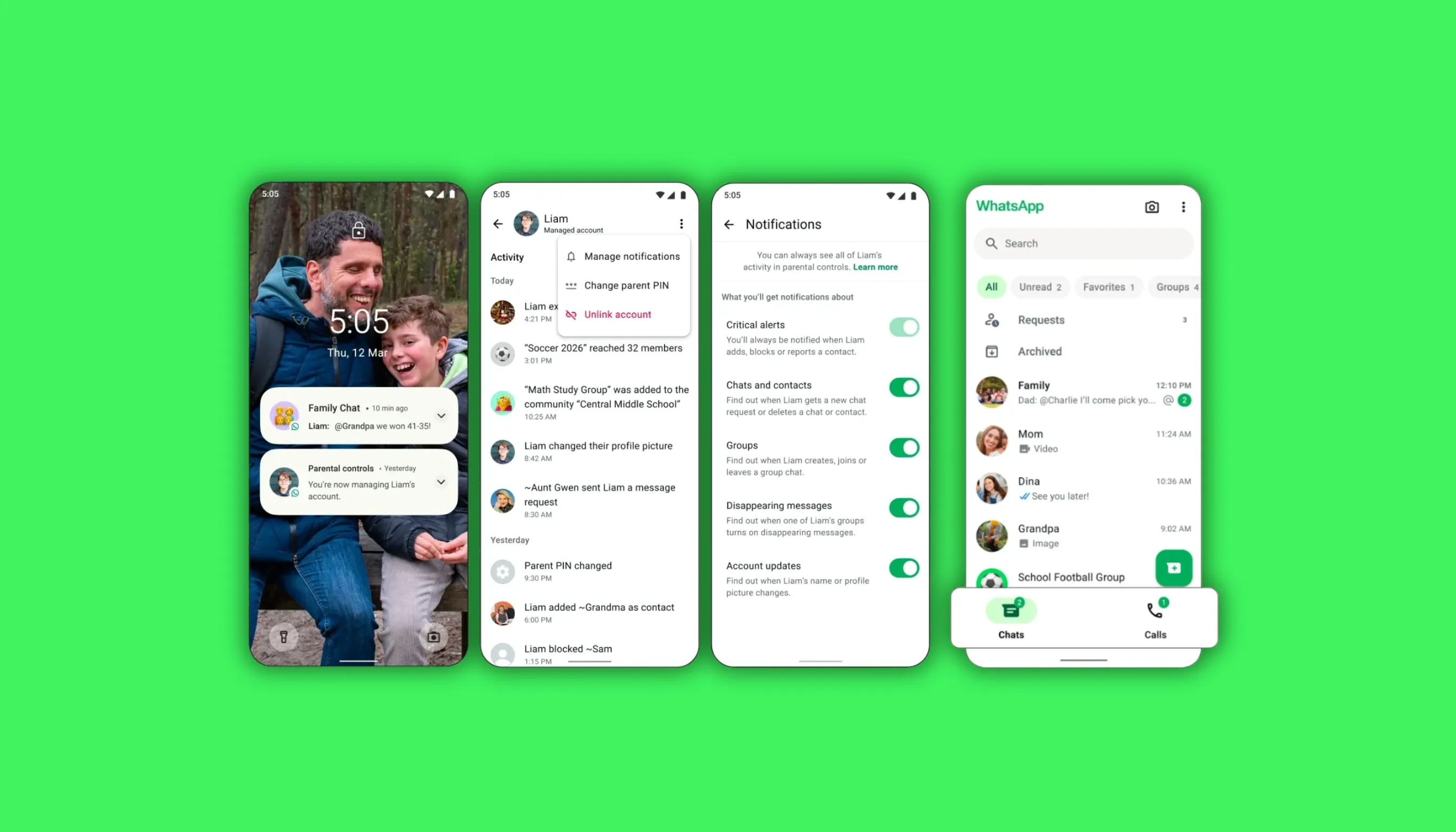
WhatsApp is rolling out parent-managed accounts, a new feature that allows parents or guardians to link their own account directly to a child’s account for added oversight. Available through the Google Play Store and the Apple App Store via the latest WhatsApp updates for Android and iOS, this feature gives parents visibility into account-level activity. WhatsApp officially announced the update on the WhatsApp Blog, confirming a gradual rollout to users worldwide.
What WhatsApp Parent-Managed Accounts Allow Parents to Do
WhatsApp secondary accounts create a secure connection between a parent’s account and a child’s account through a dedicated verification step. This verification step confirms the relationship between the guardian and the child and ensures that only authorized adults can manage the linked account. Once the connection is established, parents receive notifications about certain account-level activities, such as when a new contact is added or when account settings are changed.
Messages from unknown accounts are delivered to a separate inbox called Requests on the child’s account. Parents can review and approve these unknown message requests on behalf of the child, ensuring that children interact only with contacts a guardian has verified. Children can still send and receive messages freely from all approved contacts, which means this feature supports meaningful oversight without disrupting the child’s regular communication on the platform. These account oversight tools work alongside a carefully designed set of restrictions that shape the overall experience for younger users.
Features Available and Restricted in WhatsApp Child Accounts
WhatsApp secondary accounts give children access to the core features of the app, including messaging, media sharing, and voice or video calls. These functions remain fully available so children can communicate naturally with family members and approved friends. However, WhatsApp restricts certain features that may not be appropriate for younger users. Children with secondary accounts cannot access WhatsApp Channels or publish Status updates, which limits their exposure to broader public content on the platform.
The parent account receives notifications for specific account-level events that occur on the child’s account. These events include the addition of a new contact, changes to profile information, and modifications to account settings. WhatsApp designed these notifications to keep parents informed about account management rather than conversation content. Understanding how WhatsApp handles privacy within this system is equally important for parents considering whether to enable this feature for their family.
How WhatsApp Protects Privacy for Children and Parents
WhatsApp has built parent-managed accounts without granting any access to private message content. Parents who link their account to a child’s account cannot read conversations, view shared media files, or access call history details. The update focuses on account-level monitoring only, which includes contact requests, blocked users, and profile information changes. This distinction separates child safety controls from message surveillance, which is not a feature WhatsApp supports in this system.
End-to-end encryption remains fully active for all messages and calls within a secondary account. Conversations between a child and their contacts stay private and secure regardless of whether a parent manages the account. Children can also see that their account is linked to a parent’s account and understand exactly what account-level information is being shared with the guardian. This transparency is designed to maintain trust between parents and children throughout the experience.
Parents retain full control over the linked account and can remove or unlink the child’s account at any time. The system works alongside existing WhatsApp safety tools, including contact blocking and reporting features, to provide multiple layers of protection for younger users. Families with multiple children can create separate secondary accounts for each child, with all accounts linked to the same parent account for centralized management. The current availability of parent-managed accounts depends on which users have received the latest WhatsApp update.
WhatsApp Parent-Managed Accounts Availability and Rollout
Parent-managed accounts are currently available to a limited number of users who have installed the latest WhatsApp update on Android and iOS. WhatsApp is rolling out this feature gradually, which means not every user will see the option immediately after updating the app. Users who have access can begin setting up the connection between a parent account and a child account directly within the WhatsApp Settings menu on their device.
The Meta-owned messaging app has published detailed guides for both Android and iOS users on the WhatsApp Help Center, covering how to create, connect, and manage secondary accounts safely. WhatsApp plans to refine the interface and expand the rollout based on feedback from users who have early access to the feature. This update represents a significant step toward making WhatsApp a safer platform for younger users and their families.
Stay Updated with AllBetaInfo
Follow AllBetaInfo on Medium and X to stay informed about new WhatsApp features under development and those released to WhatsApp beta for Android, iOS, Web, and Windows. The platform continues to introduce major updates across all supported devices. Curious about WhatsApp developing Meta AI subscription plans for Android users? Read our full coverage to stay ahead of every WhatsApp update and never miss an important feature announcement.