

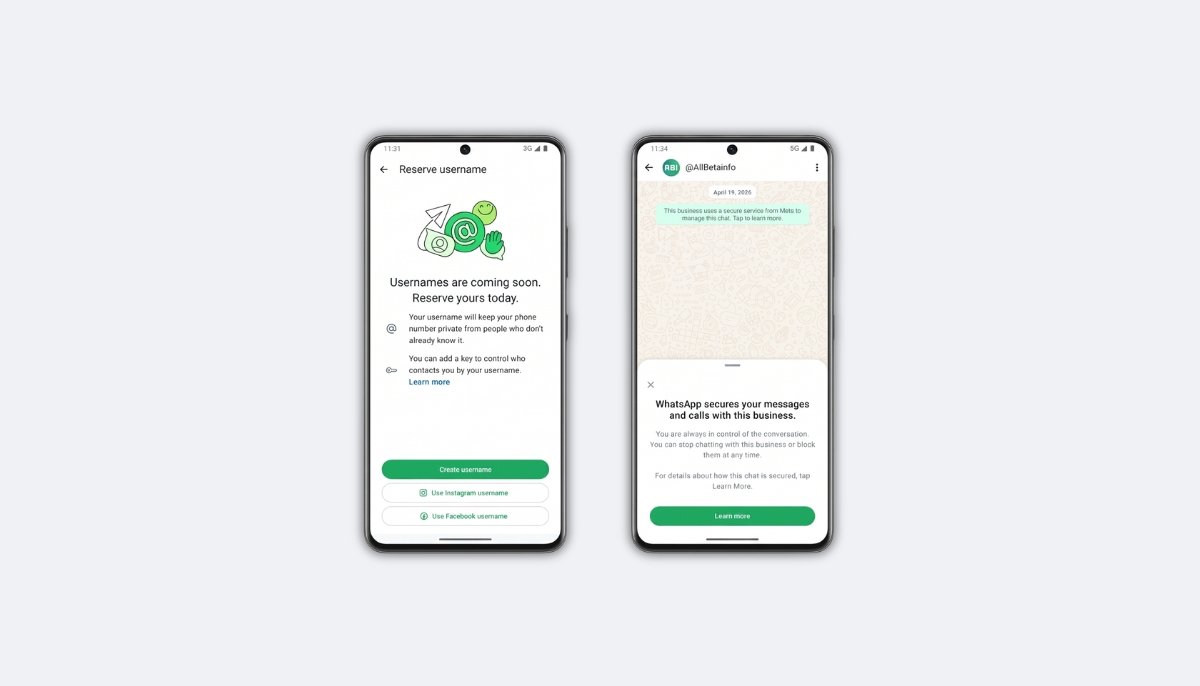
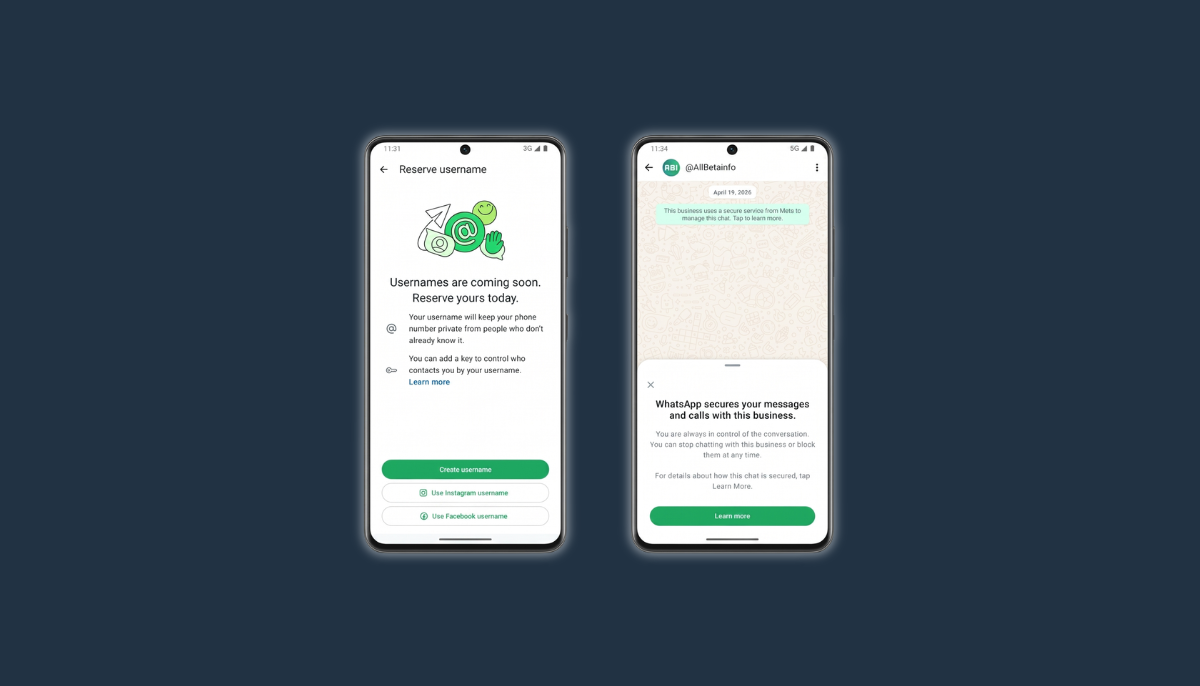
WhatsApp has officially announced the Username feature for business users on its Cloud API, letting Meta business partners reserve a handle ahead of the full public launch. This is confirmed through Meta’s official BSUID documentation, which lists the reservation channels now open to partners. Businesses can reserve a username through WhatsApp Manager, Meta Business Suite, or the Username API. This report is confirmed by the named official source and has not yet been tested hands on by the AllBetaInfo team.
What Is BSUID and Why WhatsApp Introduced It
BSUID stands for Business Scoped User ID. It is a new identifier Meta generates for every user business pair on WhatsApp.
The identifier exists so businesses can keep messaging customers who choose not to share their phone number. Once a user adopts a username, their phone number stops appearing automatically in business webhooks. The BSUID takes its place as the primary identifier for that conversation.
Each BSUID is scoped to a single business portfolio. The same WhatsApp user gets a different BSUID for every business they contact, which keeps one business from tracking a user across a different business relationship.
How Cloud API Partners Can Reserve a Username
Cloud API partners can now reserve and claim a username directly through WhatsApp Manager, Meta Business Suite, or the Username API. This is separate from the username option regular WhatsApp Business app users already had.
Cloud API partners operate at a larger scale than standard Business app users. Reserving a handle now lets them secure their preferred username before the full feature reaches all WhatsApp users. Any username a business claims today activates automatically once usernames become available in that business account’s region.
New Tools for Businesses: Send to BSUID and Phone Number Request
WhatsApp introduced two new tools alongside the username reservation update. The first is Send to BSUID, which lets a business message a customer using their Business Scoped User ID instead of a phone number.
This tool matters because a growing share of new conversations will arrive without a phone number attached. A business can still reach that customer through the BSUID the moment it appears in a webhook.
The second tool is a Phone Number Request call to action button. A business can place this button inside a conversation to ask a customer to share their number. If the customer agrees, WhatsApp adds that number to the business Contact Book automatically.
What Changes for Businesses and What Stays the Same
When a user with a username sends a first message to a business they have never contacted before, the Cloud API returns a BSUID without the phone number. This only affects new conversations started by users who already have a username.
For existing customers, the phone number stays the primary identifier. This holds as long as the business Contact Book is active and the two parties interacted recently. Businesses can continue sending messages and making calls to numbers they already know.
Authentication messages, including one tap, zero tap, and copy code templates, still require a phone number. A BSUID cannot replace the phone number for these message types.
Platform Availability for Android and iOS
This username update applies to both Android and iOS, since it runs through Cloud API business tools rather than a single mobile app version. WhatsApp Manager and Meta Business Suite are web based, so there is no separate app version tied to this reservation step.
The underlying username feature for regular WhatsApp users is rolling out on the latest versions of WhatsApp for Android and iOS alike. BSUIDs have been present in Cloud API webhook payloads since March 2026, ahead of this reservation announcement, and that applies equally to businesses supporting Android and iOS customers.
Businesses using the Cloud API are being asked to complete BSUID integration in their systems as soon as possible. WhatsApp has already updated its developer documentation with migration steps, and businesses can test BSUID handling now using the dummy API and existing webhook endpoints.
Why This Matters for WhatsApp Business Users
Businesses that wait to update their systems risk losing the ability to identify or respond to customers who adopt a username. A workflow built only around phone numbers will not recognize an incoming BSUID without changes to the CRM and webhook logic.
Reserving a username early also protects brand identity. A business that claims its preferred handle now avoids losing it to another account once the feature opens to everyone.
Conclusion
WhatsApp confirmed that the full username feature will reach all users gradually over the coming weeks, with country notifications sent directly inside the app. Cloud API partners can prepare now by reserving their username and updating systems to read the BSUID field.
The AllBetaInfo team will continue tracking each phase of this rollout as WhatsApp confirms new details through its official channels.
Stay Updated with AllBetaInfo
Follow AllBetaInfo on Medium and X to catch every new feature under development and every update reaching beta testers first. AllBetaInfo is the global source for real-time beta updates on all major apps across Android, iOS, and Web. The team covers messaging, social, streaming, and AI apps, reporting each major change the moment it lands, so readers always stay a step ahead.